Prepared for Russell Innovation Center for Entrepreneurs
We're building a pool of senior product help for Atlanta founders.
Some of the best product people in the country work in Atlanta, and founders a few miles away cannot get an hour of that experience. That is the gap we are trying to close.
- 1,000
- hours is the goal, per round
- $0
- what a founder pays
- 0%
- equity, ever
The ask: explore a pilot for three to five founders at the Russell Innovation Center for Entrepreneurs.
The gap
The expertise and the need are already in the same city.
This is not a talent gap. It is an access gap.
What help can look like
A few of the roles and functions that can step in.
A founder does not need to know which one they need. They describe the situation in plain words and we figure out the right fit. These are the most common starting points.
Product
Figure out what to build first, why it matters, and in what order.
Design
Shape how the product looks and works so a customer knows what to do.
User research
Talk to real users and turn what you hear into direction you can act on.
Data & analytics
Set up simple measurement and learn which numbers actually matter.
Engineering
Scope what is realistic, make technical choices, and get something working.
Mentorship
Talk through a decision with someone who has done the job before.
None of these? Still bring it.
If the situation does not fit a category, describe it in plain words. Sorting that out is part of the help.
How it closes
A straightforward way to hand hours to a founder who needs them.
01
Working people donate hours
Product managers, designers, researchers, data people and engineers give their own time.
02
Founders describe the situation
No finished plan needed. No need to know which role to ask for. Just the problem.
03
A real person is matched
A person on our team reads the request and makes the match by hand. Nobody is auto-assigned.
A small pilot tests something big.
A first cohort of three to five founders would use about 20 hours. That is a low-cost way to learn whether the model works for the Russell Innovation Center for Entrepreneurs before anything larger is built.
The numbers
The need is here, and it is specific.
#1
Metro Atlanta leads every U.S. metro in share of Black-owned businesses, four years running, at nearly three times the national rate.
LendingTree analysis of U.S. Census data, 2024
49%
of small businesses say a lack of technical expertise is what stops them using AI properly. Only 14% have built it into how the business runs.
Goldman Sachs 10,000 Small Businesses Voices, February 2026
12%
Mentored businesses are 12% more likely to survive their first year, and owners with five or more sessions report growth at 43% versus 30%.
SCORE, Megaphone of Main Street
Atlanta has more of these founders than anywhere else in the country. What they are stuck on is increasingly technical. And help of this kind measurably works.
Why the Russell Innovation Center
Founders trust the place that already backs them.
Help that arrives through the Russell Innovation Center for Entrepreneurs gets used. Help that arrives as a cold link does not.
There is also a straightforward fit with work the Russell Innovation Center is already funded to do. Digital RICE and the Data Science Initiative exist to build exactly this kind of capability among your members. This is one way to deliver part of it through practitioners rather than curriculum, someone doing the work now, sitting with a founder on a specific problem.
Herman Russell built one of the country's largest Black-owned businesses out of Atlanta and spent his life making room for people who had been kept out of the room. A program whose purpose is moving expertise toward people who have been locked out of it belongs here.
1,000
hours per round is the goal
$0
what a founder pays. Now and later.
0%
equity. Founders keep the work and the IP.
Who is doing this
Real people, and a real bar.
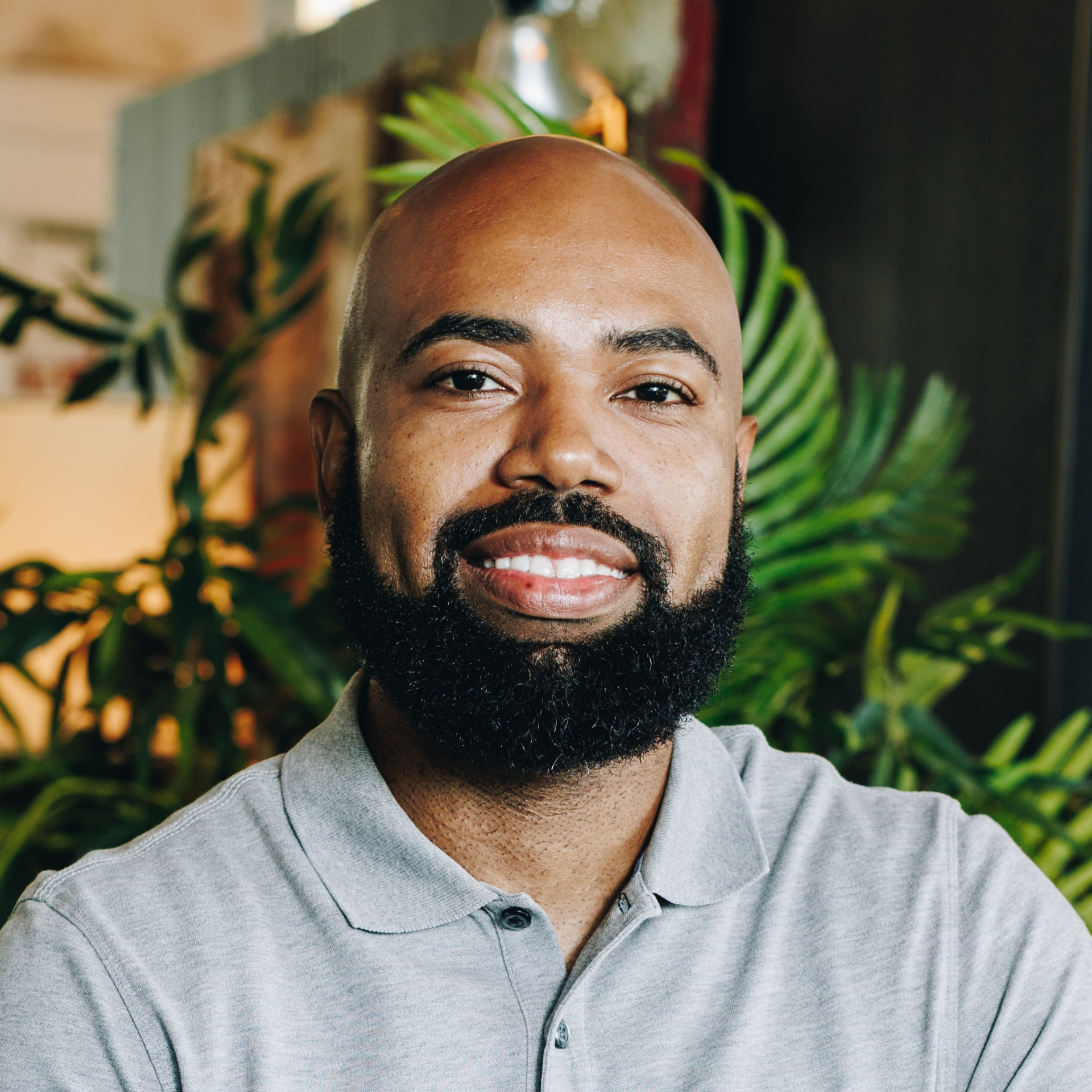
Founder & Product Leader
A product leader in Atlanta and the founder of 1000 Hours of Product. He led growth at Credit Karma across a 100M+ member base, owned mobile checkout at Lowe's, and earlier led a team of fourteen analysts at EY serving one of the largest U.S. banks. He is also the founder of City Technologies, and a Georgia State graduate.
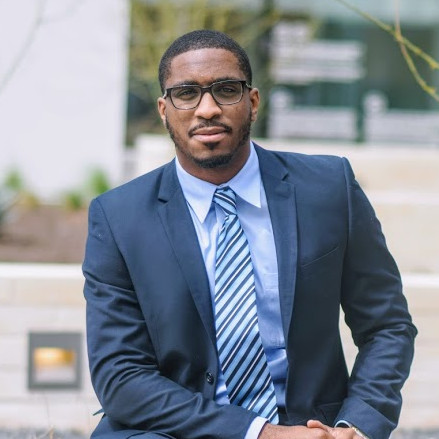
Advisor · Technical Recruiter, Cloud Operations & Innovation at Microsoft
A Morehouse economics graduate who interned for the late Congressman John Lewis, started out in sales at Oracle, moved into enterprise consulting at Deloitte, and has been at Microsoft since 2020 recruiting for Microsoft Security and Data Center Operations. He works on mentorship and inclusive hiring, and brings a clear view of how people actually find their way into good work.
The people giving hours are working product professionals, the kind who have shipped at companies like Google, Home Depot and Credit Karma, across startups, large technology companies and corporate teams. They are giving their own time, not their employer's. Requests are read and matched by hand by our team.
Ways we could work together
Exploratory, not fixed.
Nothing here is decided. These are the shapes we think would work well with the Russell Innovation Center for Entrepreneurs, offered as starting points for a pilot we design together. Any one of them works with three to five founders.
Founder hours
A block of hours reserved for founders at the Russell Innovation Center for Entrepreneurs. They describe the situation in plain words, we match them to the right product person, and the work happens over one to three sessions.
Working sessions on site
A small group of product people at the Russell Innovation Center for a half day. Founders rotate through short, focused conversations.
A live problem, worked out loud
One founder brings a real problem. A panel of senior product people works it in front of the room so everyone learns how the decision gets made.
Two others we have run and can bring: bridging members finishing programs to working product and technology people, and an AI clinic where a founder brings one process and leaves knowing whether AI can help it.
The ask
Let's explore a pilot for three to five founders.
That is the whole request. One conversation to share what we are building and why it matters, then a small cohort if it feels right. Either way, nothing is spent and we both learn something.
What the Russell Innovation Center brings
Three to five founders you think would use it well, a point of contact, and a date if the pilot happens on site.
What we bring
Intake, matching, running the sessions, holding the quality bar, and a written recap you can share with your team, your board, or a funder.
Nothing to budget to get started. No staff time. Nothing to build. If the pilot works, we design the next version together. If it does not, nothing was spent.
What is the catch?
There is not one. The hours are donated. The founder pays nothing and gives up nothing. Some founders later decide they want ongoing paid help, from us or from anyone else. That is always their call and never a condition. The free work has to stand on its own or the whole thing stops working.
Why would anyone volunteer their time for this?
Because they get something real out of it too. The bar at work has risen quickly. Most employers now treat AI fluency as an advantage or a requirement, while only about a fifth provide any formal training. People are skilling up on their own time and then finding they have nothing to point to. An hour with a real business, on a real problem, produces something they can actually show. It is not charity in either direction; it is a trade that was already waiting to happen.
How does this make money?
Today it does not. It is operated by City Technologies, a software company in Atlanta, and funded out of that. Over time we would like partners or sponsors to underwrite blocks of hours so the program can grow and serve more people. Founders would still pay nothing. That is a design constraint, not a promotional offer.
Would the Russell Innovation Center for Entrepreneurs ever be asked to pay for this?
Not to start, and never on behalf of a founder. Founders pay nothing, and that does not change. Some partners eventually choose to underwrite blocks of hours so more of their members can be served. If that ever became worth discussing here, it would be a conversation we open honestly, not a cost that appears later.
Will you sell to our founders?
No. Your members are not a list. Nobody gets pitched, added to a sequence, or followed up with. If a founder asks where to get more help, we will point them somewhere good, including places that are not us.
Who are the volunteers, and how do you know they are any good?
Working product people who have shipped at real scale. We vet every volunteer and make every match by hand. We would rather run fewer sessions than run bad ones.
What if a match does not work?
Tell us and we will re-match, no explanation needed. A bad pairing is our mistake, not the founder's.
Does this overlap with what the Russell Innovation Center already runs?
It should plug into it rather than sit beside it. Coaching circles and readiness programs build the fundamentals. This is the specialist layer on top, someone who has shipped the specific thing a founder is stuck on. If it duplicates something you already do well, we would rather find that out early and drop it.
Is this only for tech companies?
No. Product thinking is deciding what to build, who it is for, and how to tell whether it is working. That applies to a retail brand, a service business or a nonprofit as much as it does to software.
What if a founder does not know what they need?
That is the normal starting point. Working from an unclear problem is part of the job.
What happens to what a founder shares?
It stays between the founder and the person helping them. No publishing, no case studies without permission, nothing passed around. Founders keep the work and the IP.
What does the Russell Innovation Center for Entrepreneurs get?
Founders who get unstuck, and a written recap of what happened that you can put in front of your team, your board, or a funder.
Are you doing this with other organizations?
We are talking to a few. We are not asking for exclusivity and would not want it, but if the Russell Innovation Center for Entrepreneurs wants to be the first place this runs properly in Atlanta, that is available.
What if it does not work?
Then it stops, and nothing was spent. That is the point of starting small.
What a first step looks like
One conversation to share the mission, hear what the Russell Innovation Center for Entrepreneurs is working toward, and sketch a pilot for three to five founders. If it makes sense, we handle intake, matching, the sessions and a written recap. If it does not, nothing was spent.
Questions, or want this as something you can send on? Message me on LinkedIn